



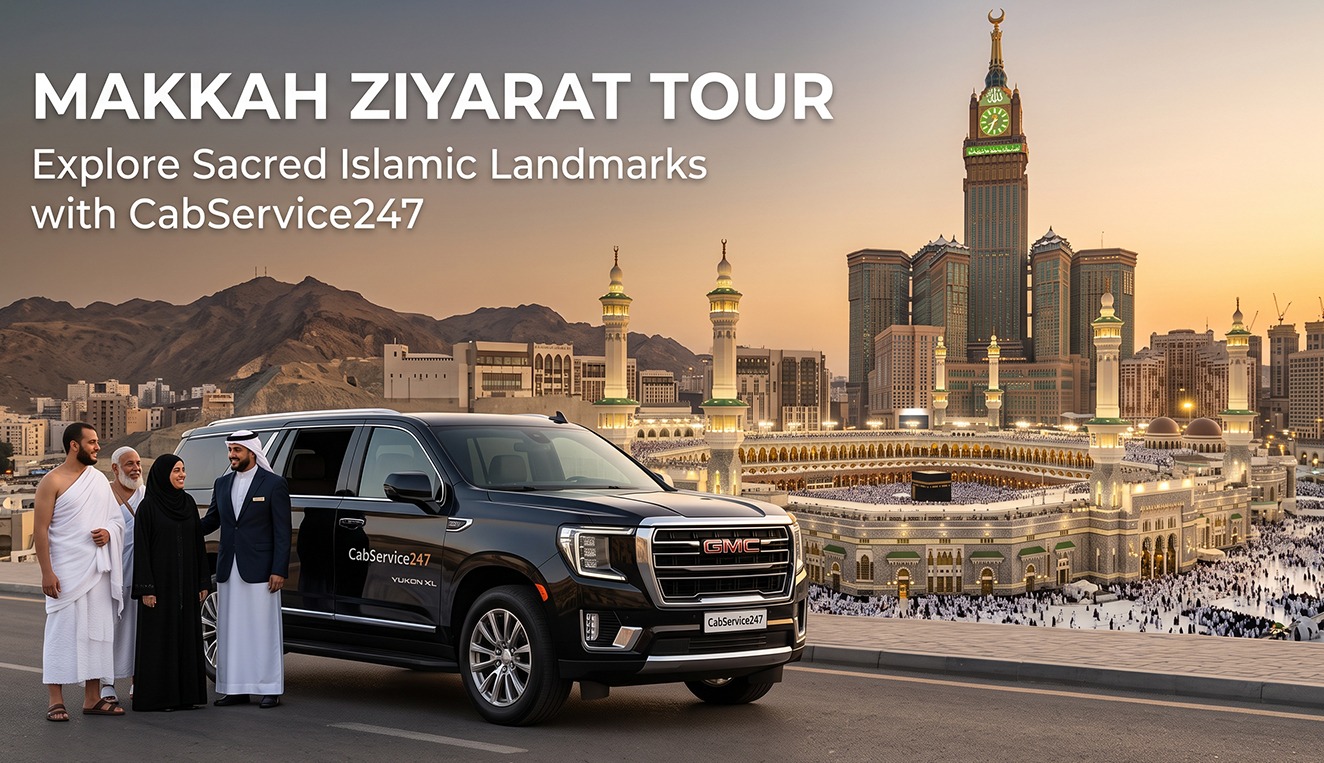
Makkah is a city that holds a special place in the hearts of Muslims around the world. Every year, millions of pilgrims travel to this blessed city to perform Umrah, offer prayers at Masjid al-Haram, and experience the spiritual atmosphere of Islam’s holiest destination.
Beyond the Grand Mosque, Makkah is home to numerous historical landmarks that preserve memories of the early days of Islam. From the mountain where the first Quranic revelation began to the locations connected with the Hijrah and Hajj, every destination offers an opportunity to learn, reflect, and appreciate Islamic history.
A Makkah ziyarat tour allows pilgrims to explore these important places while making the most of their time in Saudi Arabia. With proper planning and comfortable transportation, visitors can enjoy a convenient sightseeing experience without the stress of arranging separate journeys to each location.
CabService247 helps pilgrims arrange transportation for their Makkah travel needs, including private transfers and sightseeing journeys. Whether you are travelling with family, friends, or a group of Umrah pilgrims, planning your ziyarat transportation in advance can make your journey smoother and more enjoyable.
What Is a Makkah Ziyarat Tour?
Ziyarat refers to visiting places of religious, historical, or spiritual significance. In Makkah, a ziyarat tour generally includes landmarks associated with Prophet Muhammad ﷺ, the early Muslim community, and the rituals of Hajj.
Unlike performing Umrah, visiting these historical places is not a required part of the pilgrimage. Instead, many visitors choose to explore them to deepen their understanding of Islamic history and appreciate the significance of the places connected with the faith.
A typical Makkah ziyarat itinerary may include:
- Jabal al-Noor and the Cave of Hira
- Jabal Thawr and the Cave of Thawr
- Jabal al-Rahmah in Arafat
- Masjid Nimrah
- Mina and the Jamarat area
- Muzdalifah
- Jannat al-Mu’alla
- Masjid al-Jinn
- Masjid Aisha at Tan’eem
- Hira Cultural District
The exact itinerary depends on your available time, transportation arrangements, physical ability, and access restrictions.
1. Jabal al-Noor and the Cave of Hira
One of the most meaningful destinations on a Makkah ziyarat tour is Jabal al-Noor, the Mountain of Light.
This mountain is famous for the Cave of Hira, where Prophet Muhammad ﷺ received the first revelation of the Holy Quran through Angel Jibreel (AS). The first revealed verses of Surah Al-Alaq marked the beginning of his prophethood and the message of Islam.
For many pilgrims, visiting this area provides an opportunity to reflect on the beginning of the Quranic revelation and the extraordinary events that shaped Islamic history.
How to get there
Jabal al-Noor is located north of central Makkah. Visitors can travel to the mountain’s base by private cab, taxi, or organized ziyarat vehicle.
Reaching the Cave of Hira requires a challenging uphill climb over rocky terrain. It may not be suitable for elderly visitors, young children, or people with limited mobility.
If you prefer a less physically demanding experience, you can visit the nearby Hira Cultural District and learn about the history of revelation through its educational attractions.
Travel tip: Carry water, wear suitable footwear, and avoid attempting the climb during extreme heat.
2. Jabal Thawr and the Cave of Thawr
Jabal Thawr is another important historical destination associated with the life of Prophet Muhammad ﷺ.
During the Hijrah, Prophet Muhammad ﷺ and Abu Bakr (RA) sought refuge in the Cave of Thawr while travelling from Makkah to Madinah. They remained there for three nights before continuing their journey.
This event is remembered for its lessons of patience, courage, and reliance upon Allah during difficult circumstances.
How to get there
Jabal Thawr is located south of central Makkah. Visitors can travel to the surrounding area by private vehicle or taxi.
The cave is situated high on the mountain and requires a demanding hike. Most visitors do not need to climb to the cave to appreciate the historical importance of the location.
A private Makkah ziyarat cab can make it easier to visit the mountain’s surrounding area and continue to other landmarks without arranging separate transportation.
3. Jabal al-Rahmah – The Mount of Mercy
Located in the plain of Arafat, Jabal al-Rahmah is one of the most recognized landmarks associated with Hajj.
Arafat is the place where pilgrims gather on the 9th of Dhul-Hijjah to perform the central rite of standing at Arafat. This day is an important part of the Hajj pilgrimage and is associated with prayer, remembrance, and supplication.
Jabal al-Rahmah is often visited by pilgrims who wish to learn about the significance of Arafat and its role in the Hajj journey.
How to get there
Arafat is situated east of Makkah. You can travel to the area by private cab or arranged sightseeing vehicle when access is permitted.
During Hajj, special transport arrangements and restrictions may apply. Visitors should follow official instructions and avoid entering restricted areas.
Travel tip: Plan your visit outside peak Hajj movement periods whenever possible, and confirm accessibility before departure.
4. Masjid Nimrah
Masjid Nimrah is a well-known mosque located in the Arafat area. It is associated with the Prophet’s ﷺ Farewell Hajj and is an important landmark for pilgrims learning about the rituals of Hajj.
The mosque is particularly significant because of its connection with the sermon delivered during the Farewell Pilgrimage.
Visitors exploring Arafat often include Masjid Nimrah in their ziyarat itinerary to understand the religious and historical importance of the area.
How to get there
Masjid Nimrah can be reached by road as part of an Arafat sightseeing route, subject to local access conditions.
During Hajj, access and traffic management may differ considerably from the rest of the year. Check current arrangements before planning your visit.
5. Mina and the Jamarat Bridge
Mina is a major location in the Hajj pilgrimage and is widely recognized for its vast rows of white tents.
Pilgrims stay in Mina during designated days of Hajj and perform important rituals connected with the pilgrimage. The area also contains the Jamarat Bridge, where pilgrims perform the symbolic stoning of the Jamarat during Hajj.
For visitors exploring Makkah’s religious landmarks, Mina provides a valuable opportunity to understand the scale and organization of the Hajj pilgrimage.
How to get there
Mina is located east of Masjid al-Haram. Visitors may travel through the area by private vehicle when permitted.
During Hajj, restrictions and designated transport routes apply. Access to specific locations may be limited, so visitors should follow official guidance.
A planned ziyarat tour can help you coordinate the Mina visit with nearby Hajj landmarks.
6. Muzdalifah and Masjid al-Mash’ar al-Haram
Muzdalifah is another significant destination connected with the Hajj pilgrimage.
Pilgrims travel to Muzdalifah after leaving Arafat and spend the night there as part of the prescribed Hajj rites. The area is also associated with Masjid al-Mash’ar al-Haram.
Visiting Muzdalifah outside the Hajj season can help pilgrims understand the geographical relationship between Arafat, Muzdalifah, and Mina.
How to get there
Muzdalifah is located between Arafat and Mina. It can be included in a sightseeing route covering the major Hajj landmarks around Makkah.
Transportation access may vary depending on the season and local regulations. Plan your visit according to the permitted routes and conditions.
7. Jannat al-Mu’alla Cemetery
Jannat al-Mu’alla is a historic cemetery in Makkah associated with members of the Prophet’s ﷺ family and early Muslims.
It is an important place for remembering the early Muslim community and reflecting on the history of Islam in Makkah.
Many visitors include the cemetery in their ziyarat itinerary because of its historical significance and location near the central part of the city.
How to get there
Jannat al-Mu’alla is situated north of Masjid al-Haram. Visitors can reach the surrounding area by private cab or taxi, depending on traffic and local access.
Please respect cemetery regulations and follow any instructions regarding entry or visiting arrangements.
8. Masjid al-Jinn
Masjid al-Jinn is a historic mosque associated with the Islamic tradition of a group of jinn listening to the recitation of the Holy Quran.
The mosque is located in Makkah and is commonly included in local ziyarat itineraries because of its connection with Islamic tradition.
Its location makes it convenient to combine with nearby historical sites during a city sightseeing tour.
How to get there
Masjid al-Jinn can be reached by road from central Makkah. A private cab or arranged ziyarat vehicle can help you visit the mosque and continue to other destinations.
Visitors should respect prayer times and local mosque guidelines.
9. Masjid Aisha at Tan’eem
Masjid Aisha, also known as Masjid at Tan’eem, is an important location for pilgrims who wish to enter Ihram for an additional Umrah while staying in Makkah.
The mosque is associated with Aisha (RA), who was instructed by Prophet Muhammad ﷺ to perform Umrah from Tan’eem.
Many pilgrims visit this mosque as part of their Umrah arrangements, particularly when planning another Umrah during their stay.
How to get there
Masjid Aisha is located northwest of Masjid al-Haram. Visitors can reach it by private cab, taxi, or arranged Umrah transportation.
If you plan to perform another Umrah, make sure you understand the relevant Ihram requirements and seek religious guidance if needed.
CabService247 can help you arrange a transfer between your hotel and Masjid Aisha according to your travel schedule.
10. Hira Cultural District
For visitors interested in Islamic history, the Hira Cultural District offers an educational experience near Jabal al-Noor.
The district includes attractions such as the Holy Quran Museum and the Revelation Exhibition, which help visitors learn about the history of revelation and the significance of the Quran.
It is particularly useful for families, older visitors, and pilgrims who prefer to explore the history of Jabal al-Noor without climbing the mountain.
How to get there
The Hira Cultural District is located near the base of Jabal al-Noor, north of central Makkah.
You can reach it by private cab or taxi. Check current opening hours, ticket requirements, and visitor arrangements before your trip.
Suggested One-Day Makkah Ziyarat Itinerary
If you have one day available for sightseeing, planning your route in advance can help you make better use of your time.
Here is a suggested itinerary for a vehicle-based tour:
| Stop | Destination |
|---|---|
| 1 | Hotel pickup in Makkah |
| 2 | Jabal al-Noor and Hira Cultural District |
| 3 | Jabal Thawr |
| 4 | Arafat and Jabal al-Rahmah |
| 5 | Masjid Nimrah |
| 6 | Muzdalifah |
| 7 | Mina and the Jamarat area |
| 8 | Jannat al-Mu’alla and Masjid al-Jinn |
| 9 | Return to your hotel |
This itinerary is flexible and may need to be adjusted according to traffic, prayer times, weather, and access restrictions.
Mountain climbs can add considerable time and physical effort. If you want a relaxed tour, consider visiting fewer places and spending more time at each stop.
How to Choose Transportation for Your Makkah Ziyarat Tour
Transportation plays an important role in creating a comfortable ziyarat experience. The right option depends on your group size, budget, travel schedule, and preferred level of flexibility.
Private Cab Service
A private cab is a convenient option for couples, individuals, and small families. It allows you to plan your stops and travel directly between destinations without coordinating with other passengers.
Family SUV or Larger Vehicle
Families travelling with children, elderly relatives, or several passengers may prefer a larger vehicle with sufficient seating and luggage space.
Group Transportation
For larger groups of Umrah pilgrims, a group vehicle may be suitable when everyone follows a shared itinerary.
Before booking, confirm the vehicle’s passenger capacity and whether the fare includes waiting time, sightseeing stops, and return transportation.
Why Arrange Your Makkah Ziyarat Transportation with CabService247?
A ziyarat tour involves visiting multiple locations, some of which are spread across different parts of Makkah. Having transportation arranged in advance can simplify your journey and help you focus on the experience.
CabService247 provides transportation services for travellers in Saudi Arabia, including pilgrims travelling between Jeddah, Makkah, and Madinah.
When arranging a Makkah ziyarat journey with CabService247, you can discuss:
- Hotel pickup and drop-off arrangements.
- Your preferred ziyarat destinations.
- Vehicle options for individuals, families, and groups.
- Your planned travel date and departure time.
- The estimated duration and total transportation cost.
For pilgrims travelling with elderly family members or young children, a private vehicle can also reduce the need to repeatedly arrange transportation between different stops.
Important: Confirm the vehicle type, fare, itinerary, waiting time, and availability directly with CabService247 before finalizing your booking.
Essential Tips for a Comfortable Ziyarat Experience
A little preparation can make your Makkah ziyarat tour easier and more enjoyable.
Start early: Morning departures may help you avoid some of the afternoon heat, although traffic and access conditions can still affect your schedule.
Dress comfortably: Wear modest clothing and comfortable footwear, especially if your itinerary includes walking.
Stay hydrated: Carry drinking water and take breaks when necessary.
Consider your physical ability: Jabal al-Noor and Jabal Thawr involve strenuous climbs. Choose alternatives if you have mobility limitations.
Check access restrictions: Hajj-related locations may have restricted access during certain periods.
Respect religious sites: Follow local rules, maintain appropriate behaviour, and avoid disrupting worshippers.
Keep your itinerary flexible: Allow time for traffic, prayer breaks, and unexpected delays.
Frequently Asked Questions
How long does a Makkah ziyarat tour take?
A vehicle-based ziyarat tour may take several hours or most of a day, depending on the destinations included, traffic, and time spent at each stop. Mountain climbs can significantly extend the duration.
Can I visit Makkah ziyarat places with my family?
Yes. Many locations can be visited as part of a family sightseeing tour. However, some mountain climbs are physically demanding and may not be suitable for young children or elderly visitors.
Is transportation available from Makkah hotels?
Private transportation can be arranged from hotels in Makkah, subject to availability and pickup arrangements. Confirm your exact hotel location and itinerary when booking.
Can I visit Makkah ziyarat places during Hajj?
Some locations may be accessible, but Hajj introduces special transport arrangements and restrictions. Always follow official instructions and confirm access before travelling.
Is visiting these places compulsory for Umrah?
No. Visiting historical landmarks is not a required part of Umrah. These visits are optional opportunities to learn about Islamic history and reflect on its significance.
Conclusion
A Makkah ziyarat tour is an opportunity to explore the historical and spiritual heritage of Islam’s holiest city. From the Cave of Hira and Jabal Thawr to Arafat, Mina, and the historic mosques of Makkah, every destination offers a meaningful connection to Islamic history.
With a thoughtfully planned itinerary and suitable transportation, you can explore these landmarks at a comfortable pace while making the most of your time in Saudi Arabia.
CabService247 can help you arrange transportation for your Makkah ziyarat journey, whether you need a private cab, family vehicle, or group transportation.
Plan your Makkah ziyarat tour with CabService247 today. Discuss your destinations, travel date, pickup location, and vehicle requirements to organize a convenient journey through the historic landmarks of Makkah.
Make your Umrah journey more meaningful by discovering the places that preserve the remarkable history of Islam.


